10 August 2026
Neem and Tea Tree Oil for Skin Fungus: What a Cosmetic Oil Can and Can't Do
This article contains affiliate links. If you buy through them I earn a small commission, at no extra cost to you. It doesn't change what I recommend.
If you’ve ever typed “oil for skin fungus” into a search box, you already know how that search goes. Half the results promise a cure in two weeks. The other half are pharmacy pages that don’t quite answer your question. Almost nothing in between tells you plainly what these plant oils are, what they’re reasonably good for, and where the line falls between “worth trying” and “go see a doctor.”
That’s what this is.
First, the honest limit
A cosmetic oil is not a medicine. That isn’t a disclaimer bolted on at the end — it’s a legal category, and it changes what any bottle on a shop shelf is allowed to be.
In the EU, a cosmetic product is defined by what it does: it cleans, protects, keeps skin in good condition, changes how it looks or smells. The moment a product is intended to treat or prevent a disease, it stops being a cosmetic and becomes a medicine, which requires an entirely different registration and a different kind of evidence.
So when you read “antifungal” next to a plant oil, the useful question is not does it work but what exactly is being described. Usually it’s the ingredient’s traditional reputation, not a claim that the finished bottle will resolve a diagnosed infection. Those are two different statements, and the difference is the whole subject of this piece.
Neem oil
Neem (Azadirachta indica) is a tree from the Indian subcontinent, and its seed oil is one of the oldest skin preparations still in everyday use. Ayurvedic practice has been applying it to skin for centuries, and it remains a staple in soaps, scalp oils and after-sun preparations across South Asia.
It’s traditionally described as antiseptic and antifungal — that’s the standard description you’ll find in ingredient literature, and it’s the description Chogan uses for the neem oil in its own blend, calling it useful for easing mycoses and fungal conditions of the skin.
Two practical things about neem nobody warns you about:
- The smell is strong. Deep, green, garlicky-bitter. People either stop noticing it after a week or never make peace with it. In a blend it’s much softer than neat.
- It’s thick. Neat neem oil is heavy and slow to absorb, which is exactly why it usually appears blended with lighter carrier oils rather than on its own.
Tea tree oil
Tea tree (Melaleuca alternifolia) comes from Australia, and it’s the one almost everybody has owned at some point — usually a tiny bottle bought during an unhappy week of breakouts.
It’s commonly described as antibacterial and anti-inflammatory on skin, and it’s the reason tea tree turns up in so many products aimed at skin that’s congested rather than dry. Chogan describes it in exactly those terms.
The thing worth knowing: neat tea tree oil is harsh. Undiluted essential oil on skin is a common cause of irritation and contact allergy, which is why sensible products use it diluted in a carrier — and why a blended oil is generally a better idea than dabbing the pure essential oil straight from the bottle.
The question everyone actually arrives with: what about nail fungus?
This is the search that brings most people here, so it deserves a straight answer rather than a hedge.
Nail fungus and skin fungus are not the same problem.
Fungal skin conditions — athlete’s foot between the toes, the patches that appear in warm folds of skin — sit on and just under the surface. Something applied topically at least reaches them.
Onychomycosis — fungal infection of the nail plate — lives underneath the nail. The nail is a dense keratin shield; that’s its job. Very little of anything you brush on top gets through it in a meaningful concentration. This is why even prescription topical treatments for nail fungus need months of daily use and still have modest success rates, and why doctors often reach for oral treatment instead.
So: if your nail has thickened, gone yellow-white or crumbly, a cosmetic oil is the wrong tool, and no amount of persistence changes that. That’s a GP or a dermatologist, partly because several non-fungal conditions look identical and get treated for months as the wrong thing. A pharmacy test or a lab sample settles it quickly.
What a plant oil blend can honestly be, in that situation, is what you use on the surrounding skin while a doctor deals with the nail. That’s not nothing — but it’s not a cure, and anyone selling it to you as one is either careless or lying.
Where a blend like this actually earns its place
Set the nail question aside and there’s a real answer to “what is this for.”
- Skin that needs order rather than richness. Most facial oils are built to nourish. A blend built around neem and tea tree is aimed at skin that already has plenty of oil and is dealing with congestion.
- Feet, after the gym or a long summer. The skin between and around toes, not the nail.
- After shaving or waxing, where the complaint is irritation on otherwise healthy skin.
- As a carrier that’s already been diluted for you — which spares you the classic mistake of applying neat essential oil.
How to read the back of the bottle
Four things worth checking, on any brand:
- Is the essential oil diluted? If tea tree or neem appears near the very top of an INCI list with no carrier oils before it, that’s a strong blend — patch test it.
- Is it registered as a cosmetic? In the EU, a CPNP reference number means the product has been notified to the regulator. The blend on this site carries CPNP 4829489.
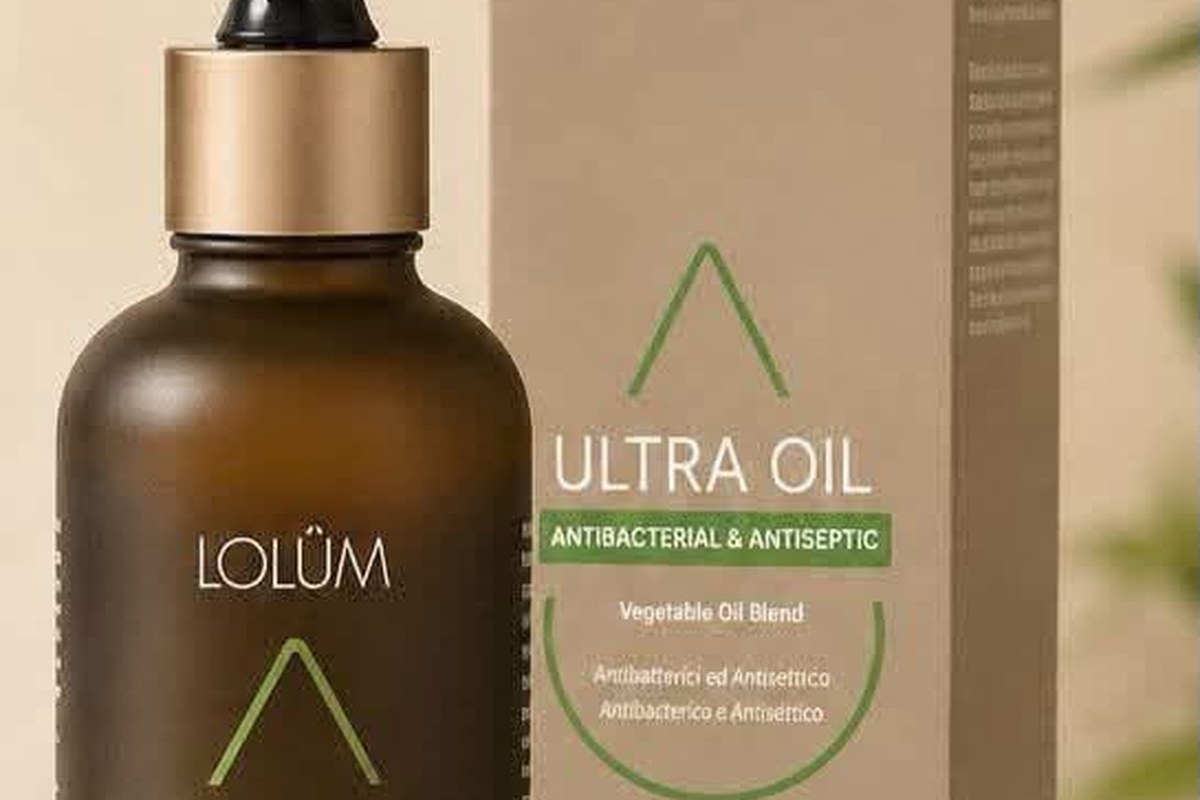
- Does the front of the pack claim to treat something? If it does, be more suspicious, not less. A legitimate cosmetic describes what it is — “antibacterial and antiseptic vegetable oil blend” — rather than a disease it will fix.
- Is there a carrier base? Almond, olive, flax, meadowfoam and similar oils are what make a blend wearable rather than heavy.
And a patch test, genuinely
Twenty-four hours, inner forearm, a couple of drops. Essential-oil blends cause contact reactions more often than plain carrier oils do, and finding that out on your forearm is better than finding it out on your face. Skip it if you’re pregnant or breastfeeding and haven’t checked with someone qualified — essential oils are one of the few cosmetic categories where that caution is real rather than decorative.
The blend I use is ULTRA OIL™ Antibacterial & Antiseptic — 50 ml, neem and tea tree over an active complex of copaiba balsam, olive, babassu, manuka and blackcurrant, on a base of almond, olive, flax and meadowfoam seed oils. Dermatologically tested, CPNP 4829489.
#ad — that link is an affiliate link. I earn a small commission and the price is the same for you. And to say it once more, because it’s the most important sentence here: this is a cosmetic oil, not a treatment. If something on your skin or nails is getting worse, see a doctor.