7 August 2026
Shea Butter for Body and Hair: How to Actually Use It
This article contains affiliate links. If you buy through them I earn a small commission, at no extra cost to you. It doesn't change what I recommend.
The first time most people open a jar of shea butter they use far too much of it, stand around feeling greasy, and conclude it isn’t for them.
It’s a technique problem, not a product problem. Shea is solid at room temperature and liquid at body temperature, which means it behaves nothing like the lotion it’s sitting next to on the shelf. Used the way a lotion is used, it sits on top of the skin. Used correctly, it disappears into it.
The technique, in one paragraph
Take less than you think — for a whole arm, something the size of a pea. Warm it between your palms for a few seconds until it turns from solid to oil. Apply to damp skin, straight out of the shower, before you’ve fully dried off. Then stop. The water on your skin is half of what makes it work: the butter seals it in rather than replacing it.
If it feels greasy ten minutes later, you used too much. That’s the only diagnostic you need.
Why on damp skin
An occlusive — which is what shea is — doesn’t add water to skin, it stops water leaving it. Applied to bone-dry skin it has little to hold in. Applied to damp skin it traps the moisture already there.
This is why the same jar can feel wonderful to one person and useless to another. Usually they’re using the same product at different moments.
On hair: ends only
The same jar works on hair, and this is where restraint matters most.
Take a trace, rub it between your fingertips until it’s clear oil, and work it through the last few centimetres — the ends, where hair is oldest and most worn. Never the roots. Hair near the scalp already has oil; the tips are the part that’s been through three years of weather, towels and heat.
Two moments it’s especially useful: on damp ends after washing, and on dry ends before a day in the sun or wind, where it works as a physical layer rather than a treatment.
Fine hair takes a fraction of what thick hair does. Start with less than you think again.
What else is usually in a shea blend
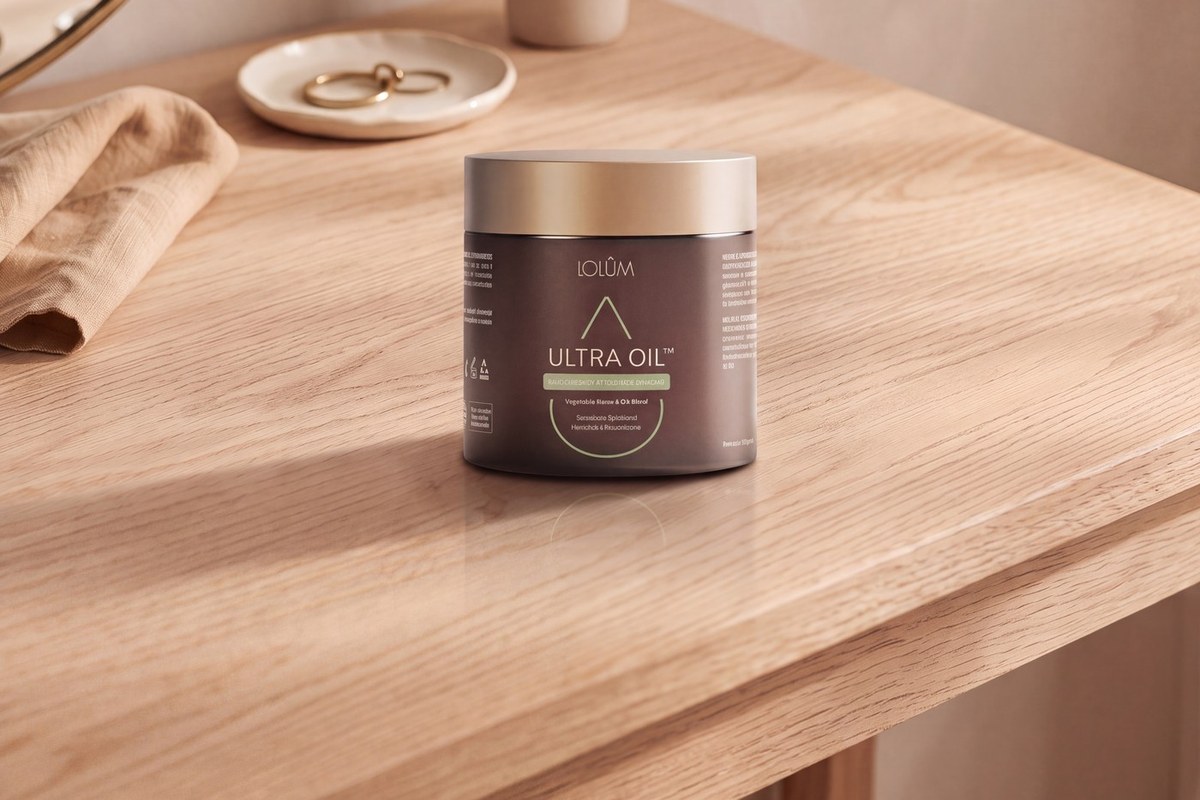
Pure shea is heavy and firm. Most blends soften it and add other properties, and the combination in the jar I use is a good example of the logic:
| Ingredient | What it’s doing |
|---|---|
| Shea butter | Softens and nourishes; the occlusive base |
| Coconut oil | Moisturises; keeps the texture from setting too hard |
| Camelina seed oil | Protects skin and soothes redness |
| Hyaluronic acid | Holds water — the counterpart to the sealing |
| Meadowfoam seed oil | Light, very stable oil; keeps the blend from turning |
Hyaluronic acid alongside butters isn’t decorative. One holds water, the other stops it escaping, and skincare generally works better when both jobs are covered rather than one.
Camelina is a nice piece of symmetry, incidentally — it’s the same plant oil that turns up in conversations about omega-3.
Practical notes
It changes with temperature. Firm in winter, soft in summer, occasionally almost liquid. Nothing has gone wrong.
A jar lasts a long time. 80 g sounds small next to a bottle of body lotion. It isn’t, because the dose is a fraction of the size.
One product for two jobs. Body and hair from the same jar is the real economy here — not the price, the shelf space.
Patch test if your skin is reactive. This one is dermatologically tested, which means it’s been assessed for skin tolerance — not that it’s guaranteed to suit everyone. A small patch on the inner forearm, wait a day.
Cosmetics care for skin and hair; they don’t treat conditions. If you have a skin condition you’re managing, that’s your doctor’s territory rather than a jar’s.