14 September 2026
Nine Aurodhea shampoos: which one is yours
This article contains affiliate links. If you buy through them I earn a small commission, at no extra cost to you. It doesn't change what I recommend.
Most people pick a shampoo by how it smells in the shop, or because that is what stood in the bathroom before. Then they are surprised the dandruff is still there — even though the bottle honestly says “anti-dandruff”.
The thing is, dandruff is not one condition. And this is not a fine point for a trichologist. It is the fork the whole choice starts from.
Dry dandruff and dandruff on an oily scalp
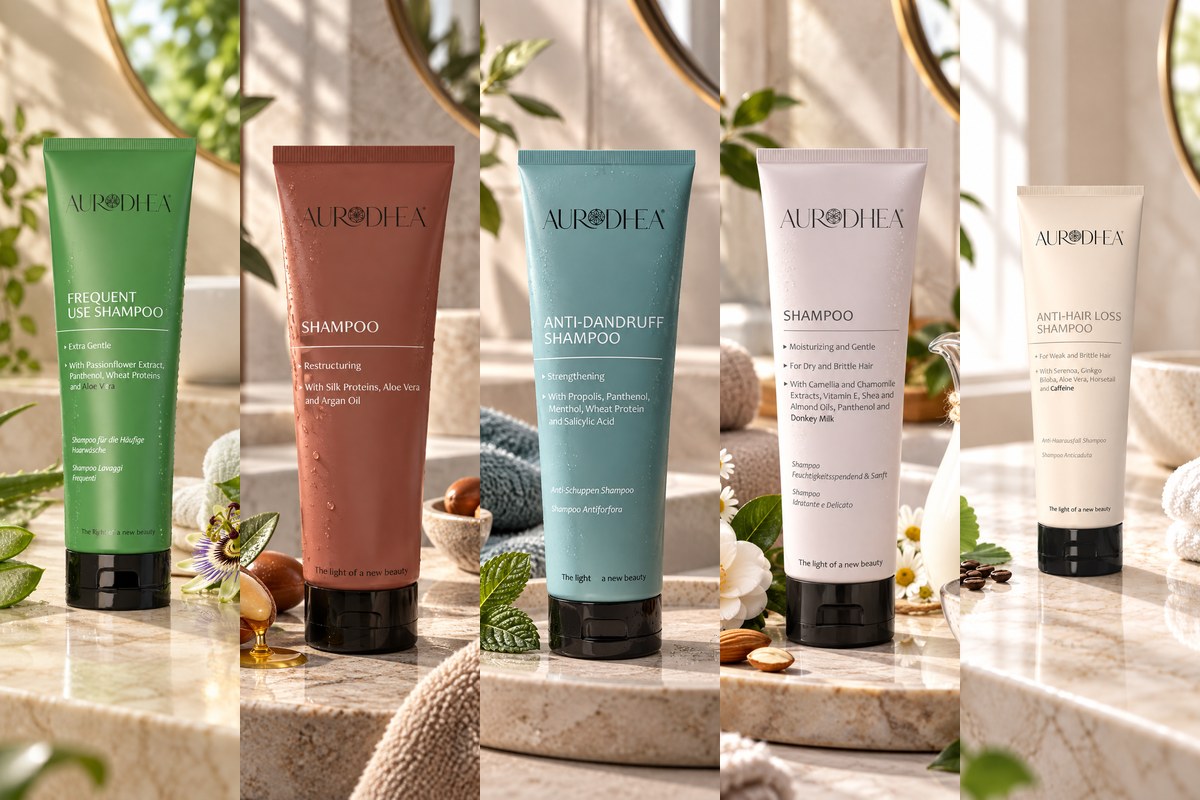
Dry white flakes, itching, a tight scalp. Exfoliation is what works here. That is exactly what sits in the salicylic acid shampoo — together with piroctone olamine, which helps regulate sebum. Plus menthol, propolis and nettle.
The scalp is oily again by evening, and the flakes come with it. There is nothing to exfoliate here — the question is how much sebum there is. For that case there is the neem oil shampoo: neem is known for its sebum-regulating action, nettle supports the balance.
Buy the wrong one and nothing happens — and the reason turns out to be not the quality of the shampoo but that the job was a different one.
When the problem is the hair, not the scalp
You wash almost every day. The question is gentleness, not active ingredients. The aloe vera shampoo is the mildest in the line: aloe, calendula, mallow, panthenol.
Dry, brittle, frizzy after drying. The hair lacks lipids and its surface is damaged. The argan oil shampoo works on both: argan and silk proteins.
Fine hair with no volume. Donkey milk — nourishment from natural lipids, shea and almond oil, plus wheat proteins for body.
A touchy scalp and coloured hair. Snail slime is the most delicate option: panthenol calms irritation, oat extract hydrates.
Noticeably more hair stays on the brush. The caffeine and serenoa shampoo: caffeine and ginkgo biloba stimulate microcirculation, horsetail strengthens the hair shaft.
For children
The baby shampoo is built around the physiological pH of the skin: aloe vera, macadamia oil, lady’s mantle extract, an allergen-free fragrance.
And the seasonal one every parent remembers at the same moment in September: the organic lice and nit shampoo, based on sulphur and neem oil. How to use it and how long to leave it on are on the pack — follow that. If nothing changes, see a doctor or a pharmacist: this is a cosmetic product, not a medicine.
What all nine share
The base formula is the same across the line; what changes is the active part. In all of them: no parabens — the preservatives are benzyl alcohol, benzoic and dehydroacetic acids, sodium benzoate and potassium sorbate. No silicones. All are dermatologically tested, and each carries its own CPNP registration number in the European cosmetics database, which you can check.
And the part worth saying plainly, because you will read the label anyway: the main cleansing agent here is ammonium lauryl sulfate. That is a sulfate. It is milder than the usual SLS and it sits alongside plant-derived glucosides, but if you are specifically after a sulfate-free shampoo, this is not it. I would rather tell you here than let you find out at home.
All are 250 ml; the baby shampoo and the lice one are 200 ml. The aloe and argan shampoos also come in small sizes — handy for travel, or for trying one before committing to the big tube.