6 August 2026
12 Foods That Support Gut Health — A Simple Everyday Guide
This article contains affiliate links. If you buy through them I earn a small commission, at no extra cost to you. It doesn't change what I recommend.
Your gut does more than digest dinner. It’s where most of your immune system lives, where certain vitamins get produced, and where trillions of bacteria quietly do their work every day.
The good news: you don’t need a complicated protocol to look after it. Most of what helps is ordinary food you can buy at any market.
Here’s what actually belongs on the list — and, just as importantly, what to stop worrying about.
Start with fibre, not supplements
If you only change one thing, change this one.
Most gut bacteria feed on fibre — specifically the kind that reaches the large intestine undigested. Without it, the bacterial community thins out no matter what else you do.
1. Oats. Beta-glucan, a soluble fibre, is exactly what beneficial bacteria ferment. A bowl of porridge is one of the cheapest gut-friendly breakfasts there is.
2. Legumes — lentils, chickpeas, beans. Among the richest sources of fibre available. If they cause bloating at first, start with small portions: that reaction usually fades as your gut adapts over a few weeks.
3. Onions, garlic and leeks. They contain inulin, a prebiotic fibre. You don’t need much — the amount that goes into an ordinary soup base is already useful.
4. Green bananas — slightly underripe. They’re high in resistant starch, which behaves like fibre. The same applies to potatoes and rice that have been cooked and then cooled: cooling changes the starch structure. Potato salad, as it turns out, has a hidden advantage.
Fermented foods: the living part
Fibre feeds the bacteria you already have. Fermented foods bring new ones in.
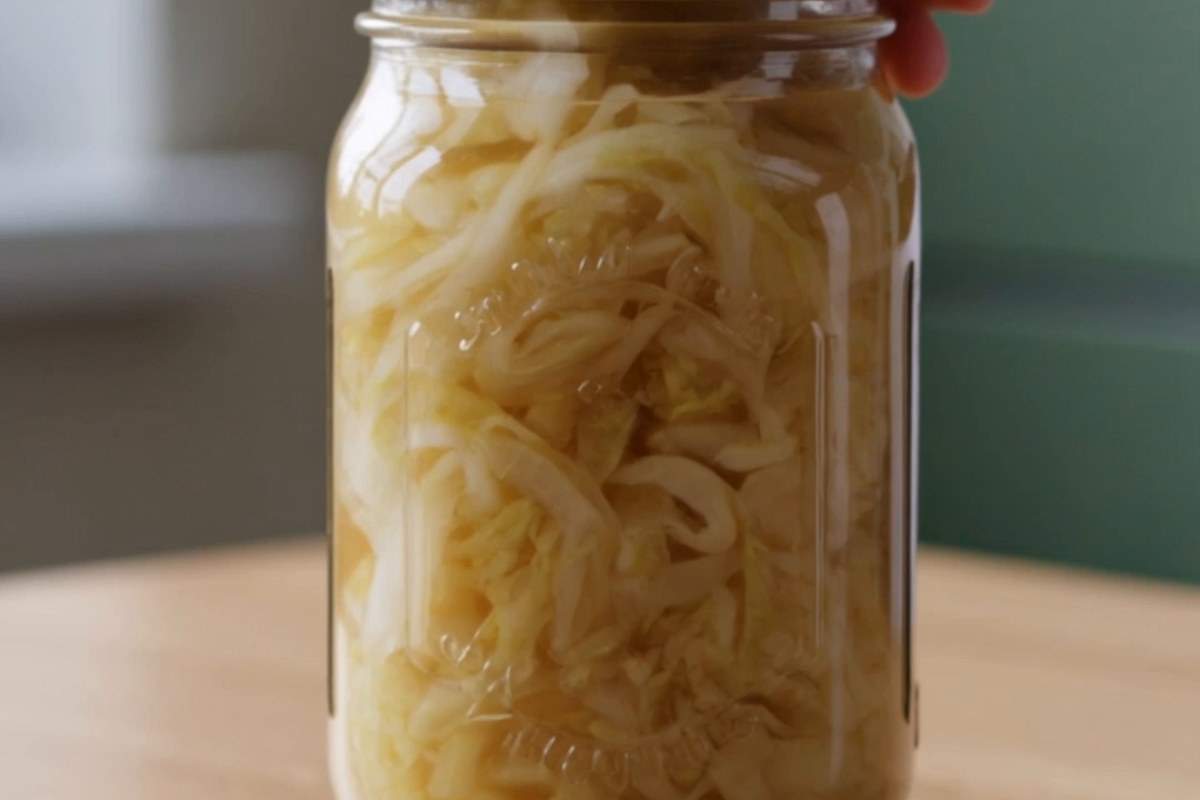
5. Sauerkraut and kimchi. Look for the unpasteurised kind, in the refrigerated section. Shelf-stable jars have usually been heat-treated, which kills the live cultures — still a fine vegetable, just not a probiotic one.
6. Kefir. Contains a broader range of microbial strains than most yoghurt. It’s also lower in lactose than milk, which makes it easier on many people who otherwise avoid dairy.
7. Live yoghurt. Check the label for “live cultures” and keep an eye on sugar: many fruit yoghurts contain more sugar than a dessert.
8. Miso and tempeh. Fermented soy, and an easy way in if dairy isn’t for you. Add miso at the end of cooking — boiling destroys the cultures.
A note on quantity: a small amount daily beats a large amount once a week. Consistency matters more than volume here.
Polyphenols — the underrated group
9. Berries. Blueberries, raspberries, blackcurrants. Their polyphenols act as fuel for certain beneficial bacteria. Frozen berries work just as well as fresh and cost considerably less.
10. Olive oil, unrefined. Polyphenols again, plus fats that help you absorb fat-soluble vitamins. Use it cold, over finished dishes, to keep those compounds intact.
11. Nuts and seeds. Fibre, healthy fats and polyphenols in one handful. Flaxseed and chia are especially useful — the soluble fibre in them is genuinely gentle on digestion.
12. Dark chocolate, 70% and above. Not a joke entry. Cocoa polyphenols reach the large intestine largely intact and are fermented there. Two squares, not a bar.
What to actually limit
You’ll notice this list is short. Long lists of forbidden foods rarely survive contact with real life.
- Ultra-processed foods. Emulsifiers and additives in industrial food appear to affect bacterial balance. This is the single biggest lever — bigger than anything you might add.
- Alcohol, in quantity. Occasional wine is one thing; regular drinking is another.
- Sugar, in the amounts hidden inside ordinary products — sauces, breakfast cereals, flavoured yoghurts.
That’s it. No need to fear gluten, nightshades or dairy unless you personally react to them.
Build a week, not a rule
Here’s what this looks like in practice, without turning your kitchen into a project:
Morning. Porridge with frozen berries and a spoon of seeds. Or kefir. Lunch. Anything you normally eat, plus a side of legumes or a fermented vegetable. Dinner. Vegetables with olive oil. Onion or garlic in the base. Evening. Two squares of dark chocolate, if you want them.
That’s roughly six or seven gut-friendly items a day without a single special purchase.
Where supplements fit — and where they don’t
Real food comes first. There’s no supplement that compensates for a diet built on ultra-processed products, and anyone telling you otherwise is selling something.
But there are situations where the plate genuinely isn’t enough:
- After a course of antibiotics. They don’t distinguish between harmful bacteria and helpful ones.
- During travel. New water, new food, disrupted routine.
- In periods of prolonged stress, which affects digestion more than most people expect.
- When you simply can’t eat fermented food regularly — a common reality for anyone with a demanding schedule.
In those cases a probiotic is a reasonable addition. The one I keep on hand is a capsule with the MICROCORE™ complex, taken once a day with breakfast.
The order matters, though, and it’s worth repeating: food first, supplement second. A probiotic capsule alongside a diet of fibre and fermented vegetables is a sensible addition. The same capsule instead of that diet is just an expensive habit.
The short version
Eat fibre daily. Add something fermented most days. Cut back on ultra-processed food. Give it a few weeks — bacterial populations shift gradually, not overnight.
And be patient with the early bloating if you’re increasing fibre quickly. It usually means the process is working, not failing.
Food supplements are not medicines. They do not replace a varied diet and a healthy lifestyle. If you have a medical condition or take medication, speak to your doctor.