6 August 2026
Which Aloe Vera Juice Should You Buy? A Side-by-Side Comparison
This article contains affiliate links. If you buy through them I earn a small commission, at no extra cost to you. It doesn't change what I recommend.
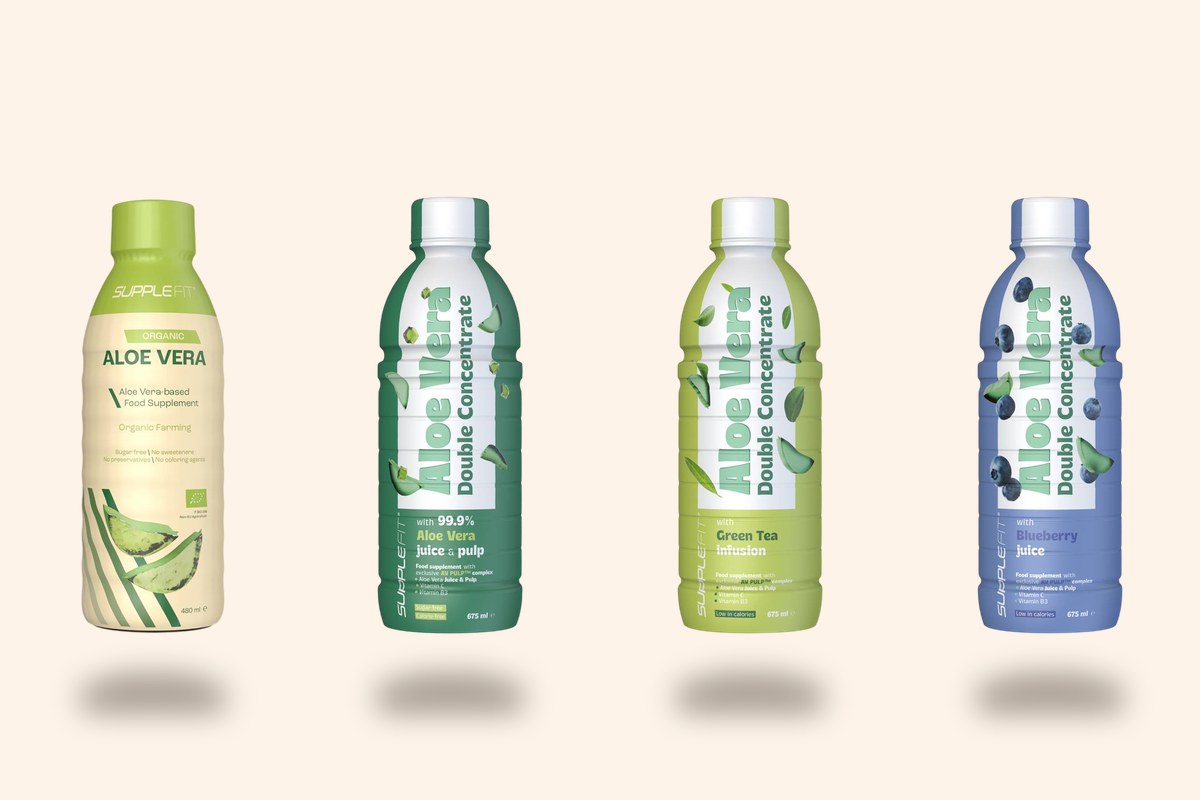
Four bottles on the same shelf. All say aloe vera. All cost exactly the same.
That last part is the surprise, and it’s worth starting there — because it removes the question most people try to answer first. You cannot pick the cheap one. There isn’t a cheap one. Whatever you choose, you pay the same, which means the only thing left to compare is what’s actually inside.
So here they are, side by side, on the things that genuinely differ.
The quick answer
If you want the recommendation without the reasoning:
| If you want… | Choose |
|---|---|
| The most aloe per glass | 99.9% juice and pulp |
| Nothing but aloe, no additions | Organic juice, filtered |
| Something you’ll actually enjoy drinking | With green tea or with blueberry |
| To start and not overthink it | 99.9% juice and pulp |
Now the detail.
What all four have in common
Before the differences, the shared ground — because it’s most of the product.
All four are inner-leaf aloe, which is the part that matters. (If that distinction is new to you, it’s the single most important thing about buying aloe, and it’s covered properly in the guide to aloe vera juice.) The 99.9% and the organic one have no sugar; the green tea and blueberry versions are sweetened with fructose. All four are shaken before pouring and taken before a meal.
And all four cost the same.
That price identity is unusual, and it changes how you should shop. With most product ranges, the premium option costs more and you’re weighing whether it’s worth it. Here there’s nothing to weigh. Pick on taste and composition alone.
1. Aloe Vera Juice and Pulp 99.9% — the default
675 ml · AV PULP™ complex · vitamin C · vitamin B3
The highest aloe content of the four, and the one with pulp left in. It’s a double concentrate, so a serving is 25 ml — which works out to 27 servings per bottle, close to a month at one a day.
The pulp is the visible difference. Hold the bottle up and you’ll see pieces suspended in it, settling at the bottom between shakes. That’s the inner leaf, unfiltered. Some people prefer the texture; some find it strange at first and stop noticing by day three.
Vitamin C contributes to the normal function of the immune system and to the protection of cells from oxidative stress. Vitamin B3 contributes to the maintenance of normal mucous membranes. Together they contribute to normal energy-yielding metabolism.
Choose this if: you want the most aloe for your money and no particular flavour preference. It’s the one I drink, and the one I’d hand to someone starting out.
→ Aloe vera juice & pulp 99.9%
2. Organic Aloe Vera Juice — the purist option
480 ml · 100% organic aloe · no added vitamins · no preservatives
This is the different one, and the difference isn’t a downgrade — it’s a different philosophy.
It’s pressed from organically grown plants and then filtered, so there’s no pulp: clear liquid, closer to water in appearance. No added vitamins, no sweeteners, no preservatives. Just aloe.
It’s also the smaller bottle at 480 ml, and it’s dosed differently: 30 ml, two or three times a day, half an hour before meals — neat, or diluted with water or fruit juice. It’s the only one of the four meant to be taken neat.
Choose this if: organic certification matters to you, or you specifically don’t want added vitamins in a drink — for instance if you already take a multivitamin and would rather not stack them. Also the honest choice if pulp texture puts you off.
3. Aloe Vera with Green Tea — the one that tastes like a drink
675 ml · AV PULP™ · green tea leaf infusion · vitamin C · vitamin B3
Same base as the 99.9%, with an infusion of green tea leaves. Same 25 ml serving, same 675 ml bottle.
Let’s be straight about what this is and isn’t. Green tea here is a flavour and an infusion, not a weight-loss mechanism, whatever the internet tells you about green tea extract. What it genuinely does is make the drink taste like something rather than like a supplement — and for a habit you’re meant to keep daily, that’s not a small thing.
Choose this if: you’ve tried plain aloe and found it a chore. The best aloe juice is the one still in your fridge in week six, not the purest one you abandoned in week two.
4. Aloe Vera with Blueberry — the easiest to like
675 ml · AV PULP™ · blueberry juice · vitamin C · vitamin B3
Again the same base, this time with blueberry juice — and, like the green tea version, sweetened with fructose. Worth knowing if you’re choosing aloe partly to avoid sugar: then it’s the 99.9% or the organic one.
Of the four, this is the one most likely to be finished by someone who doesn’t otherwise enjoy aloe. It’s also the easiest to give to someone else in the household without a negotiation.
Choose this if: taste is your deciding factor and green tea isn’t your thing.
Note: currently out of stock — check availability before ordering.
How to actually decide
Strip it down and there are only three real questions.
Do you want pulp or not? Pulp means more of the leaf and a texture. Filtered means clear and neutral. Neither is better; this is preference.
Do you want added vitamins? Three of the four include vitamin C and B3. The organic one deliberately doesn’t. If you already take a multivitamin, the plain one avoids doubling up.
Will you actually drink it? The one nobody asks and the one that decides the outcome. Plain aloe is an acquired taste. If you know yourself well enough to know you won’t acquire it, start with green tea or blueberry and switch later if you want.
That’s the whole decision. There’s no hierarchy here, no entry-level and premium — the price makes sure of that.
Dosage, briefly
- 675 ml bottles (99.9%, green tea, blueberry): 25 ml in 500 ml of water, once a day, preferably before a meal. 27 servings per bottle — about a month.
- 480 ml organic: 30 ml, two or three times a day, half an hour before meals, neat or diluted.
- All of them: shake first, refrigerate after opening. Once opened, the 99.9% keeps 30 days and the organic one 20.
If you want the reasoning behind those numbers, and the answer to the sediment question, it’s in the full aloe guide.
Who shouldn’t drink any of them
Same for all four:
- Children under 12
- During pregnancy or breastfeeding
- Anyone with a chronic condition or taking regular medication — speak to your doctor first
The short version
Four aloe juices, one price. The differences that matter:
- 99.9% juice and pulp — most aloe, has texture, the sensible default
- Organic, filtered — purest, no additions, smaller bottle, different dilution
- With green tea — same base, tastes like a drink
- With blueberry — same base, easiest to like
Pick on composition and taste, because price won’t help you. And whichever you pick, the one that works is the one you’ll still be drinking next month.
Food supplements are not medicines. They do not replace a varied diet and a healthy lifestyle. Not recommended for children under 12, during pregnancy or breastfeeding. If you have a medical condition or take medication, speak to your doctor.