21 September 2026
Serum or cream: which goes on first — and why this cream is morning-only
This article contains affiliate links. If you buy through them I earn a small commission, at no extra cost to you. It doesn't change what I recommend.
I’ve been using this cream for a month now: my skin feels soft and nourished. It’s a day cream, so for the evening I ordered the serum from the same line — and went through both data sheets to see how they fit together. Here’s what I found.
You bought a serum and a cream, and now you’re standing at the mirror with two jars: which one first? The short answer: lightest to richest. The thinner, water-based one first, the thicker one with oils on top.
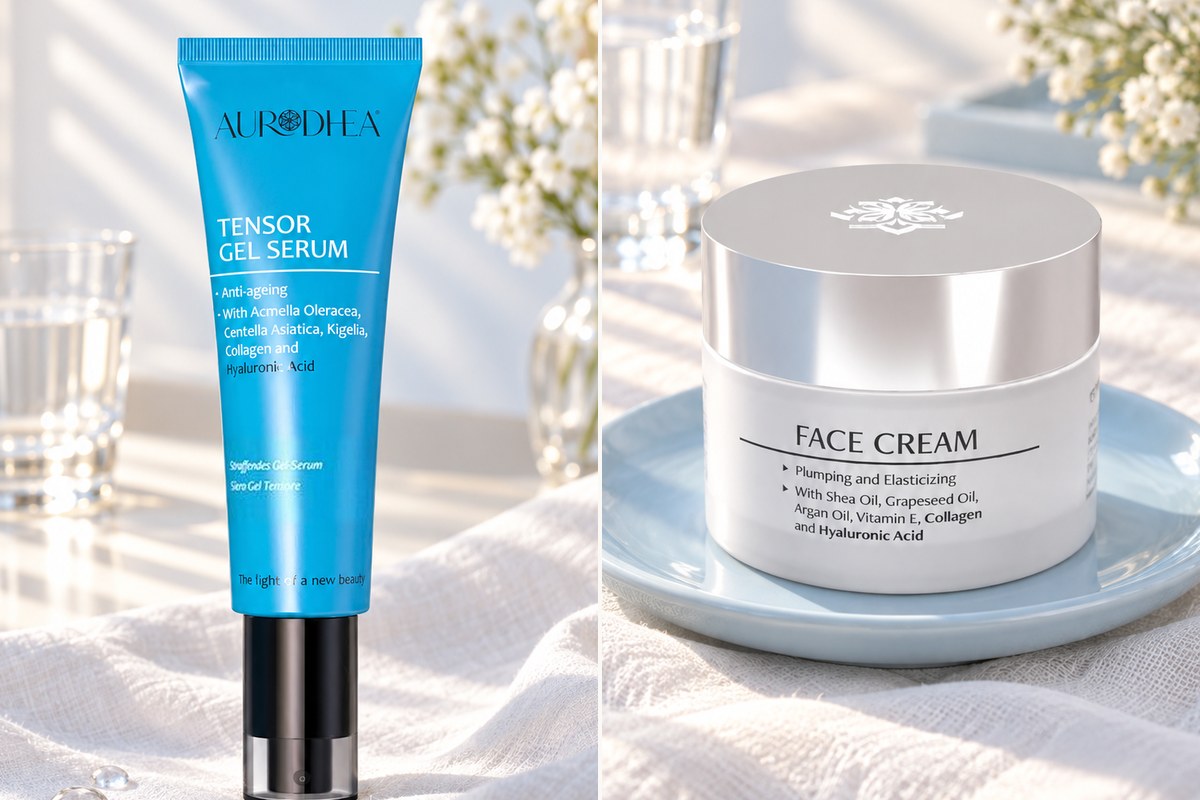
It’s easiest to explain with a real pair. AURODHEA makes a gel serum, CR08B, and a face cream with collagen and hyaluronic acid, CR05B. Everything below comes from their data sheets.
Why the order matters at all
Look at the ingredient list. The serum starts with water and glycerin, then the extracts: acmella, centella, ginseng, kigelia. There are no plant oils in it. It’s a gel — it sinks in fast and leaves no film.
The cream goes straight from water into its oil phase: caprylic triglycerides, shea butter, argan, sunflower and grapeseed oils. It sits on the skin as a layer, and that’s its job.
Put the cream on first and the serum ends up sitting on top of the oils, barely reaching the skin. The other way round works: gel absorbed, cream on top.
What each one does
CR08B gel serum, 50 ml. Hyaluronic acid handles the moisture. The maker describes acmella (also called jambu) as a plant with a “Botox-like” effect: in their words, it gradually relaxes the small muscles behind expression lines. Kigelia, according to the maker, leaves skin smoother and firmer, and centella with ginseng firm the skin and support its own collagen production. Use: morning and/or evening, on cleansed skin.
CR05B cream, 50 ml. Collagen and hyaluronic acid, plus shea, argan and grapeseed oils and vitamin E. The maker promises moisture, suppleness and radiance after every use, and says outright that it suits young skin too: the point isn’t to rescue anything but to slow down the first expression lines.
The line that isn’t on the box
The cream’s data sheet says: apply in the morning to thoroughly cleansed skin. There’s no evening use listed. It’s a day cream.
So the routine for the two looks like this:
- Morning: cleanse → serum → cream.
- Evening: cleanse → serum.
About the collagen in the jar — honestly
The collagen in the cream is hydrolysed and works on the surface of the skin together with the rest of the formula: it moisturises and softens. That’s not the same thing as your skin’s own collagen, and the cream doesn’t promise to “restore” it — not on the data sheet, not on the box. The only mention of your own collagen production is on the serum’s data sheet, in the maker’s words, about centella and ginseng.
If what you want is collagen from the inside, that’s a different category — supplements. Chogan has one: SKINAIL COLLAGEN.
Do you need both?
No. Each works on its own:
- Cream only: in the morning, after cleansing.
- Serum only: morning and evening. If your skin is dry, you’ll want some cream over it in the morning.
Together they simply layer without a fight: no acids, no retinol, no vitamin C — the ingredients that don’t get along with each other. Hyaluronic acid and collagen are in both; that’s repetition, not a clash.
Worth knowing before you buy
- The cream’s fragrance contains three substances labelled as allergens: alpha-isomethyl ionone, hydroxycitronellal, amyl cinnamal. If you’ve reacted to them before, this cream isn’t for you.
- After opening, both last 6 months.
- Both are dermatologically tested and nickel tested, each with its own number in the EU cosmetics register (CPNP 2780687 for the cream, 2885049 for the serum).
- This is skincare: it cares for skin, it doesn’t treat it.
Full ingredients and directions for both, with a PDF of our own, are on the serum and cream pages.